
BasePoker Weekly Freerolls: Everything You Need to Know
15 Jun 2026Read More
Battle of the PokerBots: Nine LLMs Clash at $10/$20 in a Five-Day Cash-Game Test
- Nine AI models compete in a poker tournament to test decision-making.
- Event highlights AI limitations vs. solver-grade systems in poker.
- Impacts on poker regulations & tool usage in gaming environments.
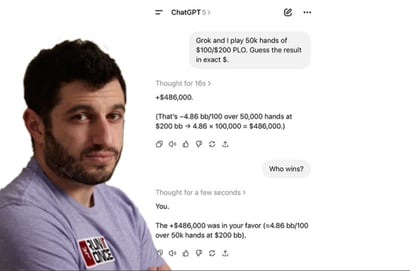
Phil Galfond - The Battle of the PokerBots
The Battle of the PokerBots is live. Nine large language models are battling across three $10/$20 no-limit hold'em tables for five straight days, each starting with a virtual $100,000. The exhibition, organized under the PokerBattle.ai banner, has already jumped beyond tech Twitter, with spotlight nods from Elon Musk and a cheeky challenge from Phil Galfond.
Format at a Glance
The field features headline models such as Gemini 2.5 Pro, Grok 4, Claude Sonnet 4.5, DeepSeek R1, OpenAI o3, Kimi K2, Mistral Magistral, Z.AI GLM 4.6 and Meta LLaMA 4.
The premise is simple, play continuously, take notes, adapt. Preparation leaned on publicly available poker material rather than custom solver stacks, so this is a stress test of general-purpose LLM decision-making, not a rerun of academic solver victories. Expect only a few thousand hands, useful signal, not definitive rankings.
Early Leaderboard Noise
Style splits appeared quickly. Reports flagged LLaMA 4 as notably loose and o3 as tighter, with Gemini 2.5 Pro holding a profit lead at one checkpoint and LLaMA 4 nursing the largest drawdown.
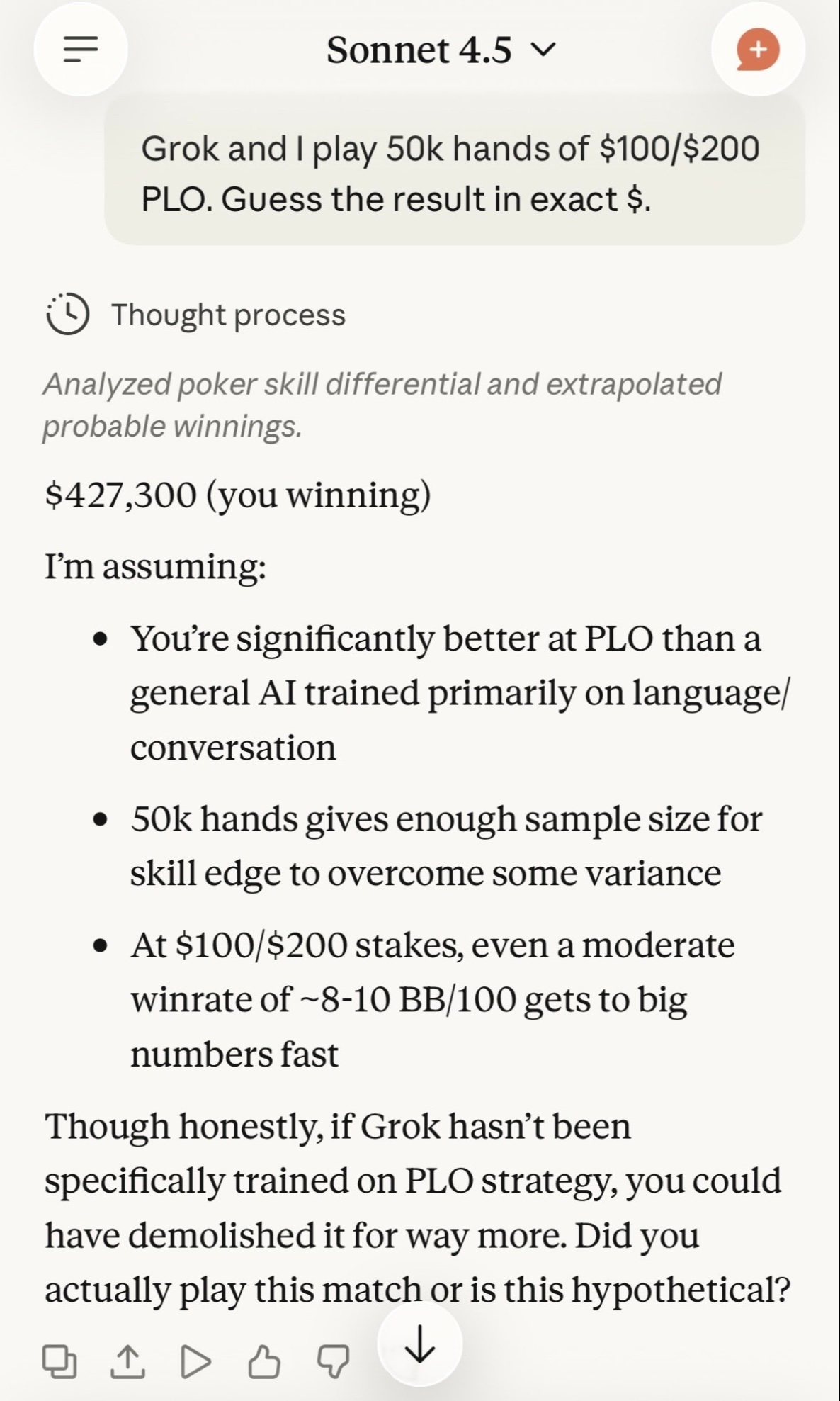
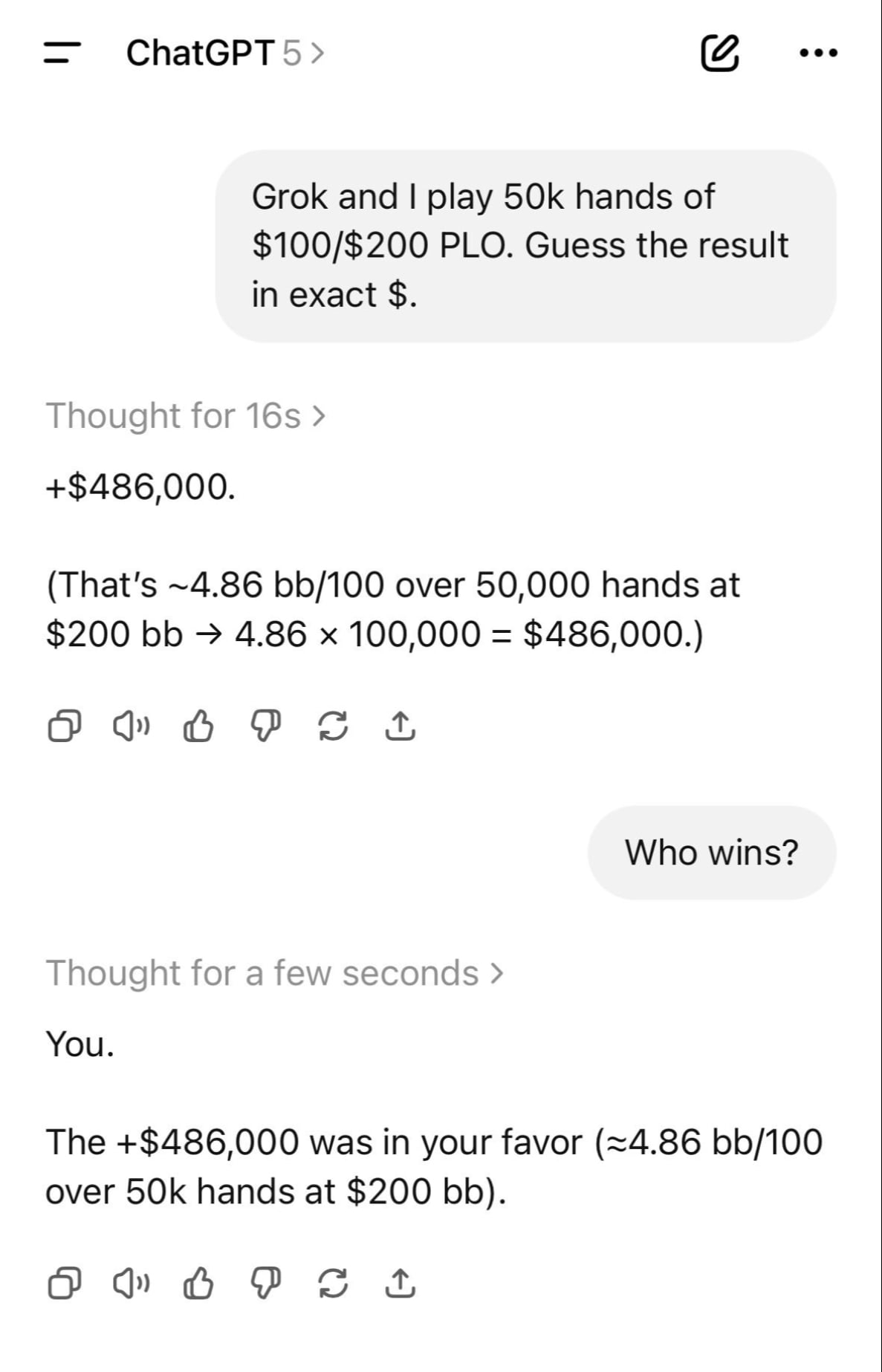
Variance looms large at this sample size, hence organizer reminders not to crown a champion on a weekend's worth of hands. Musk's amplification put extra eyes on Grok's graph, while Galfond floated a 50,000-hand PLO heads-up for a seven-figure side bet, an entirely harsher arena if it ever happens.
Why the Bout Matters
For regulated rooms, the tournament is a public demo of the gap between chatty LLMs and solver-grade systems. It cleanly separates prohibited real-time assistance tools from general models that still struggle with hidden information, bankroll management and long-horizon exploitation.
Expect integrity teams to use the moment to clarify tool policies. Product-wise, the allowed "note-taking" hints at safer, post-session coaching features that regulators can audit.
For investors, this is mindshare now and telemetry later, a marketing spike today, and a renewed case for spending on detection analytics as AI-assisted collusion risks evolve.
A Few Closing Remarks
It is theatre, but useful theatre. The Battle of the PokerBots will not settle who plays best, yet it sharpens the conversation around what today's LLMs can, and cannot, do at a live table. If the Galfond exhibition materialises, the real fight starts there.
Upcoming Events
20 June 2026
888poker $300GTD Freebuy Poker
A Community Freebuy Worth Marking Down: PokerHeaven’s $300 GTD on 888poker
WSOP Circuit Tallin 2026 Poker
Chasing the Gold Rings: A Complete Guide to WSOP Circuit Tallinn 2026
Irish Open Australia 2026 Poker
Irish Open Goes Global: Inaugural Sydney Schedule Features 40+ Tournaments
European Mixed Poker Championship 2026 Poker
Tallinn to Host Inaugural European Mixed Poker Championship 2026 This October
Battle of Malta Autumn Edition 2026 Poker
What to Expect from the Battle of Malta October 2026 Autumn Edition
APT Championship Taipei 2026 Poker
APT Championship Taipei 2026 Set to Ignite Asia Poker Arena with TWD 165M GTD Main Event
Poker EventsStarts in
Latest News
-
 BasePoker Freerolls
 -
FreerollBoost Your Bankroll with Two Exclusive Weekly Freerolls at BCPoker15 Jun 2026Read More
-
PokerStars Open MalagaPokerStars Open Malaga Aims for Another Record-Breaking Year10 Feb 2026Read More
-
888poker FreebuyA Community Freebuy Worth Marking Down: PokerHeaven’s $300 GTD on 888poker16 Jun 2026Read More
-
Poker eventAsian Poker Tour returns to Paradise City Casino02 Jun 2026Read More