
Grind in PokerWired x Stake Poker $250 GTD Freebuy on Friday
15 Jun 2026Read More
Kremlin’s Ruble Rush: Is Russia Finally Ready to Legalize Online Casinos and Poker?
- Russia considers legalizing online casinos to boost tax revenue.
- Proposal targets illegal markets and includes player protections.
- Opposition persists; final approval from Putin pending.
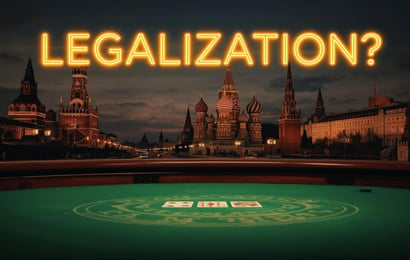
For over fifteen years, Russia has been a "forbidden fruit" for the regulated online gaming industry. Since the 2009 crackdown that shuttered thousands of gaming halls and relegated physical casinos to remote "special zones," the online space has remained a strictly prohibited gray market. But that might be about to change.
Recent reports from Moscow indicate that Finance Minister Anton Siluanov has formally urged President Vladimir Putin to consider the legalization and regulation of online casinos. The motivation is clear: a staggering potential windfall for the state treasury.
The 100 Billion Ruble Question
The Russian government isn’t suddenly having a change of heart regarding the ethics of gambling. Instead, the proposal is framed as a pragmatic economic move. According to the Ministry of Finance, a regulated online market could generate upwards of 100 billion rubles (€1.1 billion) annually in tax revenue.
Currently, while sports betting is legal and highly regulated through the centralized TSUPIS system, online casinos and poker sites operate in the shadows. Estimates suggest that the illegal market in Russia is nearly double the size of the legal sector. By bringing these operators into the light, the Kremlin aims to implement a 30% tax rate on revenue and force all transactions through a state-monitored "special operator."
The Poker Paradox: From "Sport" to "Regulated"
For poker players, this news is the most significant development since the game was stripped of its "official sport" status in 2009. For years, Russian grinders have lived in a state of flux, legally allowed to play in remote zones like Sochi, but forced to use VPNs and offshore mirrors to access the game from home.
If this proposal passes, poker is expected to be a cornerstone of the new regulated market. However, the experience may change: industry insiders predict a "closed liquidity" model similar to France or Spain. This would mean Russian players would likely be restricted to playing against their fellow citizens in a domestic pool, monitored by the state to ensure tax compliance (at an estimated 13-15% on individual winnings) and player identification.
A Defensive Move or an Economic Necessity?
The timing of the proposal has raised eyebrows. Skeptics suggest that the push for legalization is an attempt to shore up state resources as the conflict in Ukraine continues. However, proponents argue that prohibition has failed.
Despite the best efforts of Roskomnadzor (the state media watchdog) to block sites and the Central Bank to curb payments, Russian players have continued to flock to offshore sites. Legalization would allow the state to reclaim the "lost" revenue while providing a safer, albeit heavily monitored, environment.
Player Protection and the Road Ahead
A critical piece of this transition is the National Self-Exclusion Register, set to go live in September 2026. This system would allow Russians to ban themselves from all legal gambling via the Gosuslugi (State Services) portal, providing the "social safety net" that conservative factions in the Kremlin have long demanded.
While the Finance Ministry is pushing hard, the path to legalization isn't without hurdles. The Russian Orthodox Church and various civic organizations remain opposed. Furthermore, Vladimir Putin has yet to give the plan his final public blessing.
For the international community, a regulated Russia would be one of the largest market openings in a decade. But with heavy taxes and state surveillance, it remains to be seen how many global operators will be invited to the table.
Stay tuned to PokerHeaven for more updates as this story develops.
Upcoming Events
19 June 2026
Road to Banco €550 Poker
Poker-SM Live 2026 Goes More International: Open For All €250K Banco Championship
888poker $300GTD Freebuy Poker
A Community Freebuy Worth Marking Down: PokerHeaven’s $300 GTD on 888poker
WSOP Circuit Tallin 2026 Poker
Chasing the Gold Rings: A Complete Guide to WSOP Circuit Tallinn 2026
Irish Open Australia 2026 Poker
Irish Open Goes Global: Inaugural Sydney Schedule Features 40+ Tournaments
European Mixed Poker Championship 2026 Poker
Tallinn to Host Inaugural European Mixed Poker Championship 2026 This October
Battle of Malta Autumn Edition 2026 Poker
What to Expect from the Battle of Malta October 2026 Autumn Edition
APT Championship Taipei 2026 Poker
APT Championship Taipei 2026 Set to Ignite Asia Poker Arena with TWD 165M GTD Main Event
20 June 2026
Poker EventsStarts in
Latest News
-
 Stake Freebuy
 -
Poker-SM Live 2026Poker-SM Live 2026 Goes More International: Open For All €250K Banco Championship18 Jun 2026Read More
-
BasePoker FreerollsBasePoker Weekly Freerolls: Everything You Need to Know15 Jun 2026Read More
-
FreerollBoost Your Bankroll with Two Exclusive Weekly Freerolls at BCPoker15 Jun 2026Read More
-
PokerStars Open MalagaPokerStars Open Malaga Aims for Another Record-Breaking Year10 Feb 2026Read More